
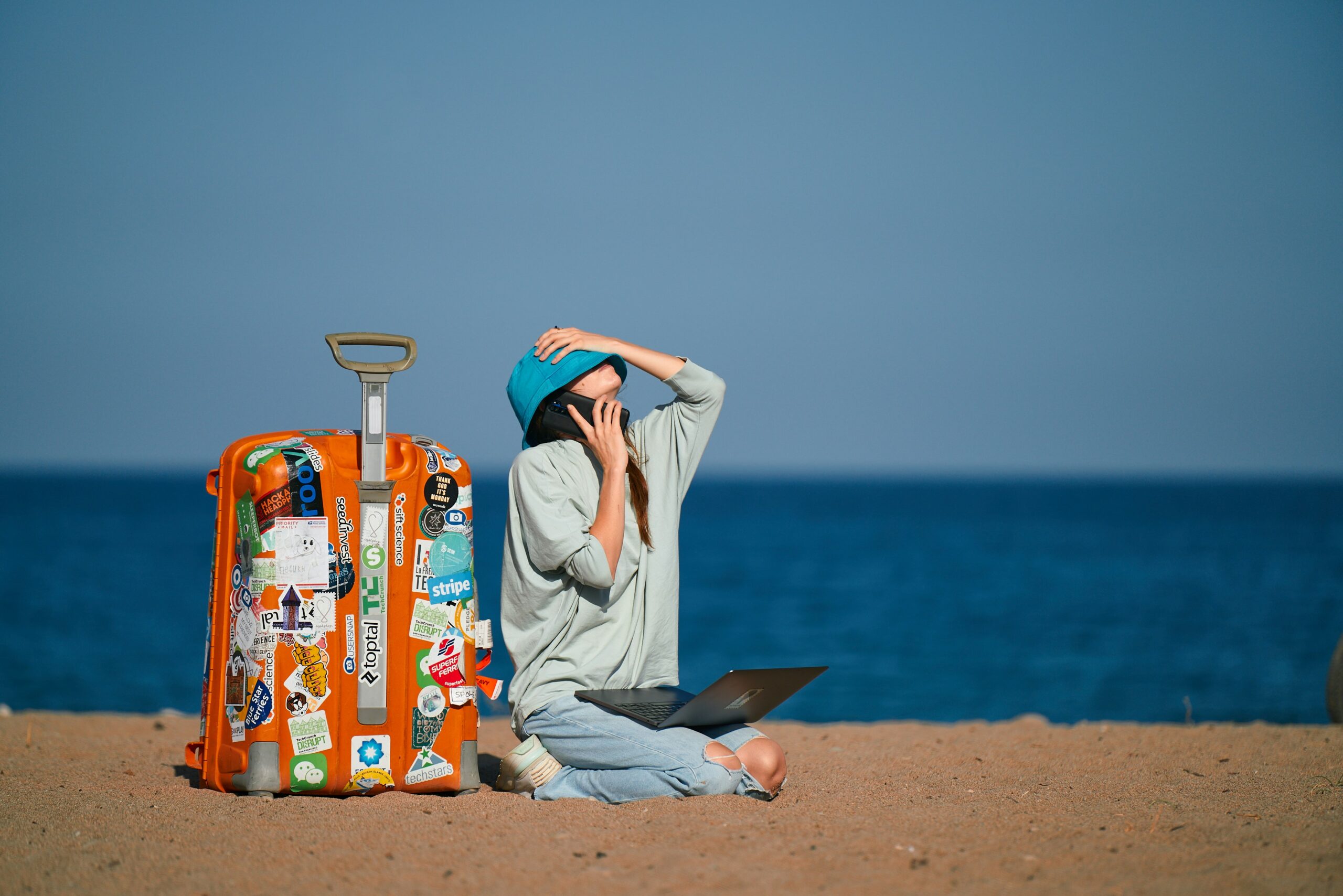
The digital nomad carry-on packing list
This page contains affiliate links, including Amazon Associates links. If you make a purchase through one, I may earn a small commission at no extra cost to you. As an Amazon Associate I earn from qualifying purchases. It helps the site run 🙂 But whenever possible, shop small and local!
What tech should I pack as a digital nomad?
A lightweight laptop, a universal adapter with USB-A and USB-C ports, a portable battery pack, noise-canceling headphones, and an eSIM or unlocked phone cover almost every situation a remote worker runs into on the road. These five items handle daily work, charging, focus, and connectivity in nearly any country. Everything past this list is a nice-to-have, not a requirement for getting through a trip.
- A lightweight laptop. Non-negotiable when it also doubles as your office. My personal preference is a MacBook Pro (13-inch).
- A universal travel adapter with USB-A and USB-C ports built in, so you’re not juggling separate bricks.
- A portable battery pack, for the moment you’re two hours into exploring a new city at 2% battery. (Or a bigger one for your laptop / charging multiple devices—I like Anker.)
- Noise-canceling headphones. Good for flights and co-working spaces, and occasionally for blocking out a hostel snorer.
- An eSIM or unlocked phone. More on this on the Helpful Websites and Remote Work Guide pages.
What camera gear do I need for shooting travel content?
A drone, a compact or mirrorless camera, extra memory cards with a card reader, and a packable tripod cover most travel content needs. The drone requires checking local drone laws before every flight, since rules vary a lot by country. A mirrorless body handles shots a phone can’t, and a lightweight tripod works on almost any surface you find yourself shooting from.
I’m shooting content on the road, so this section runs longer than most packing lists.
- My drone (DJI Mavic Air 3), packed carefully. Check destination drone laws before you fly, some countries are stricter than you’d think.
- A compact camera or mirrorless body, for when a phone shot won’t cut it. (I currently have the Sony A7RII, but many a newer model has come out.)
- Extra memory cards and a small card reader.
- A packable tripod with flexible legs. Works on almost any surface you find yourself on.
What clothes should I pack for long-term travel?
One pair of versatile shoes, layered clothing instead of bulky items, quick-dry fabric for sink-washing on the road, and one “nice enough” outfit cover almost every situation long-term travel throws at you. Layering beats packing a heavy coat, and quick-dry materials matter more than people expect once laundry access gets unpredictable. The goal is fewer items that each do more work, not more items for every scenario.
- One pair of versatile shoes that work for hiking and going out.
- Layers over bulk (a packable down jacket beats one heavy coat every time).
- Quick-dry everything, because you will be sink-washing clothes in a hostel bathroom and you should accept that now.
- One “nice enough” outfit for the surprise dinner invite or last-minute client call.
What health and toiletry items are worth packing?
Solid toiletries like shampoo bars and deodorant, a basic first-aid kit with pain relievers and blister pads, extra doses of any prescriptions, and offline-saved travel insurance details cover the health basics for long-term travel. Solid toiletries solve carry-on liquid limits and cut down on plastic waste. Saving insurance details offline matters because you can’t always count on wifi in an emergency.
- Solid toiletries like shampoo bars and solid deodorant. Better for carry-on liquid limits, better for the planet.
- A basic first-aid kit with pain relievers and blister pads, plus extra doses of any prescriptions in case a flight gets delayed.
- Travel insurance details saved offline, not just in an email you can’t access without wifi. See the Helpful Websites page for who I use.
What documents should I carry while traveling?
A passport with printed copies stored separately from the original, digital and printed copies of travel insurance, and a backup debit or credit card kept in a separate bag from your primary card cover the essential documents for long-term travel. Keeping copies separate from originals protects you if a bag gets lost or stolen. A backup card matters more than people plan for until they actually need it.
- Passport, plus printed copies stored separately from the original.
- Digital and printed copies of travel insurance.
- A backup debit or credit card kept in a separate bag from your primary card, in case one gets lost or stolen.
What I don’t bring
Anything “just in case.” If I haven’t used it in two trips, it doesn’t make the third. You can buy almost anything you forgot once you land, so pack like you know that.